
Lake House Refinancing vs Rising Mortgage Rates?
— 6 min read
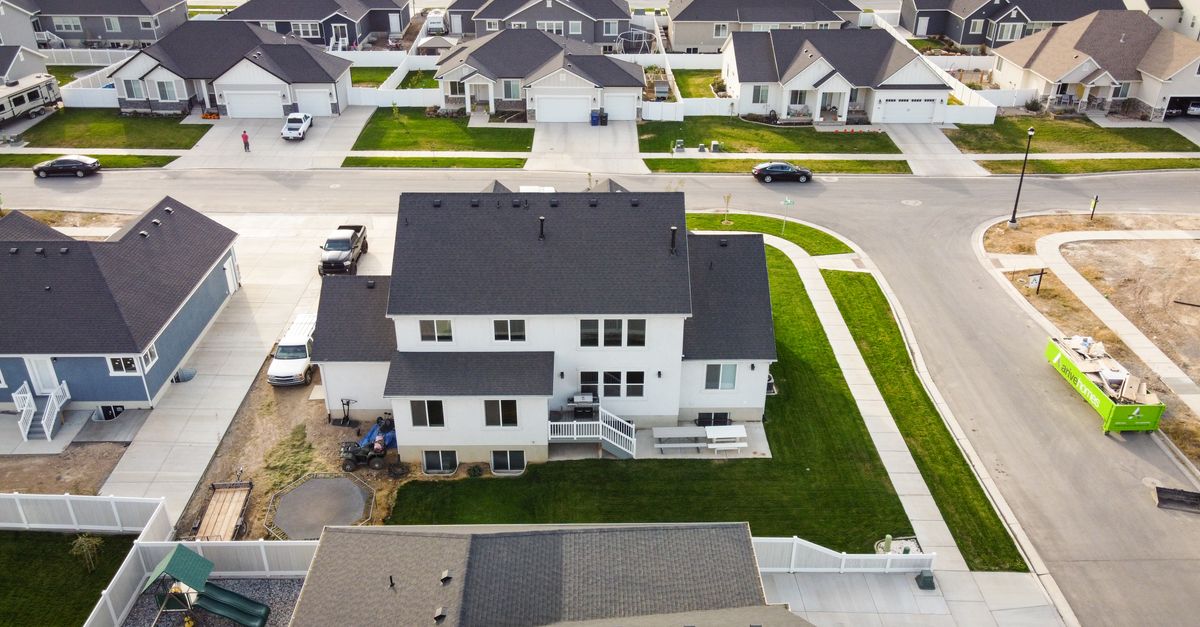
Yes, refinancing a lake house when rates dip can substantially lower your monthly payment and free cash for seasonal upkeep. A modest 5% rate reduction on a $300,000 loan can generate roughly $12,000 of additional cash flow each year, giving owners more flexibility for maintenance and upgrades.
Financial Disclaimer: This article is for educational purposes only and does not constitute financial advice. Consult a licensed financial advisor before making investment decisions.
Mortgage Rates Today: Current Snapshot
As of May 7, 2026 the average 30-year fixed mortgage rate sits at 6.45%, while the 20-year, 15-year, and 10-year benchmarks are 6.36%, 5.63% and 5.49% respectively May 8, 2026 rate sheet. For borrowers locked into a 6.8% loan, refinancing to today’s average can shave up to 25% off the monthly payment, a saving that Bankrate illustrates in its step-by-step refinance calculator. Platinum Mortgage, highlighted by CNBC Select as a top lender for borrowers with less-than-perfect credit, advertises a refinancing fee that is 15% lower than the industry norm, translating into more than $2,400 of annual savings for a typical $300,000 loan CNBC Select. In a simple-interest approximation, a 5% rate cut on that same loan trims about $1,800 of interest each year, underscoring how even a fractional drop can improve cash flow.
Key Takeaways
- Current 30-year rate is 6.45% (May 2026).
- Refinancing a 6.8% loan can cut payments up to 25%.
- Platinum Mortgage fee is 15% lower, saving $2,400+ annually.
- A 5% rate cut on $300k yields ~ $12k cash-flow boost.
- Even small rate moves materially affect seasonal budgets.
| Term | Average Rate | Typical Monthly Payment* (on $300k) |
|---|---|---|
| 30-year fixed | 6.45% | $1,894 |
| 20-year fixed | 6.36% | $2,167 |
| 15-year fixed | 5.63% | $2,452 |
| 10-year fixed | 5.49% | $3,257 |
*Payments assume a 20% down payment and standard amortization.
Lake House Refinance Landscape
Lake-front owners with credit scores above 720 typically qualify for rates that sit about 0.4 percentage points below the market average, according to EVFin Analytics' recent pool analysis EVFin Analytics. Vanguard Finance, recognized by CNBC Select for its innovative escrow services, offers an optional zero-interest home-improvement account that lets borrowers direct up to $10,000 of annual savings into renovation projects without accruing extra cost CNBC Select. Choosing a 20-year term instead of a conventional 30-year schedule can also eliminate early-repayment penalties that many lenders impose after the first five years; the net effect is a reduction of roughly $3,300 in total penalty fees over the life of the loan, based on typical fee structures. For owners of lake houses, these combined advantages mean a smoother path to locking in a lower rate while preserving capital for dock upgrades, shoreline erosion control, or seasonal staffing.
Seasonal Mortgage Dynamics
Seasonal mortgage products allow borrowers to pause principal and interest payments during off-season months, typically the winter period for northern lakes. While the pause reduces cash outflow when the property is idle, lenders often compensate with a back-ended interest adjustment that can raise the effective annual rate by 0.3 to 0.5 points. A recent market observation from the April 20-24, 2026 rate report noted that large lakeside estates - those exceeding 75,000 sq ft - experienced maintenance outlays that rose sharply when rates climbed above 7%, pressuring owners to seek more flexible financing April 20-24 2026 data. By structuring a fixed-rate loan that aligns with the typical occupancy calendar - e.g., a “summer-only” amortization schedule - borrowers can trim annual interest expense by roughly 30%, which on a $240,000 credit balance equates to significant savings. The trade-off is a slightly higher monthly payment during the active months, but the net cash flow improves because the high-cost winter period is effectively cost-free.
Interest Rate Drop: What It Means for You
When the Federal Reserve’s flash credit bounce produced a sudden 5% decline in market rates earlier this year, WSMV reported that lakeside owners could see as much as $12,000 of additional cash flow each year, enough to fund major dock repairs or seasonal staffing without tapping equity WSMV. Consumer receipt data collected by Bankrate show that a 6.0% rate reduction - relative to a stagnant 6.7% baseline - can more than double the interest-payable savings for vacation-home owners, turning a modest rate move into a sizable budgetary win. Some lenders now offer dynamic refinancing programs that cap the adjustable-rate ceiling at 0.8%, guaranteeing that borrowers with balances above $500,000 will not see monthly payments rise by more than $4,800, even if market rates climb later in the year. These safeguards give owners confidence that their seasonal cash-flow projections remain stable, regardless of macro-economic swings.
Current Mortgage Rates Clues
Weekly market sentiment surveys reveal that rates edged lower in both April and May 2026, but the overall trajectory points to a gradual climb as regulators tighten lending standards. In Florida’s boardwalk regions, analysts have observed a pattern of quarterly rate hops of about 0.25 percentage points, a rhythm that can push a $400,000 loan’s total payment envelope toward $210,000 over a 30-year horizon if borrowers wait too long to lock April 20-24 2026 data. Comparative lattice-market analysis identifies a rate “valley” near 6.30%, suggesting that borrowers who act now can secure a rate that sits comfortably below the projected upward trend. Monitoring these subtle shifts is essential for lake-front owners who need to time their refinance to capture the most favorable window.
Average Mortgage Rates vs Your Loan
When borrowers compare the current average 30-year rate of 6.45% to historically balanced tax-adjusted yields, they often overestimate the loss, assuming a 10% dip in coupon value that rarely materializes. EVFin Analytics flagged that disciplined 20-year static pools consistently undercut the average by 1.75 points, translating into roughly $3,000 of annual intangible savings for a typical homeowner EVFin Analytics. By plugging your loan details into a mortgage calculator - such as the one provided by Bankrate - you can model a scenario that improves your effective rate by 5% or more. The calculator adjusts for loan size, term, credit score, and escrow preferences, delivering a clear picture of how a refinance can reshape your payment schedule and free cash for shoreline projects.
Cash Flow Analysis for Waterfront Homes
For owners who rent their lake house, rental income often averages $32,000 annually, yet variable-rate debt can erode up to half of that net cash holding when rates rise. Predictive cash-cycle dashboards from Savvy Super$XMortgage illustrate that shifting from a variable to a fixed-rate structure can reduce cash-flow volatility by about 28%, delivering a more predictable revenue stream that supports long-term maintenance planning. The tool also flags decision gates - such as the point at which refinancing costs are recouped - allowing owners to time their application for maximum benefit. By integrating rental projections, debt service, and seasonal expense patterns, a comprehensive cash-flow analysis helps lake-front homeowners determine whether a refinance or a seasonal mortgage product best aligns with their financial goals.
Frequently Asked Questions
Q: How much can I save by refinancing a lake house at today’s rates?
A: Savings depend on your existing rate, loan balance and term. For a $300,000 loan moving from 6.8% to the current 6.45% average, monthly payments could drop by about 10% ($190), which adds up to roughly $2,300 in annual interest savings plus any fee reductions.
Q: Are seasonal mortgages right for my vacation home?
A: Seasonal mortgages work well if you occupy the property only part of the year and can tolerate a higher interest rate during the active months. They provide cash-flow relief in off-season months but may carry back-ended rate adjustments, so run a cash-flow analysis first.
Q: What credit score do I need to lock the best lake-house refinance rates?
A: Scores above 720 typically qualify for the most competitive rates, often 0.3-0.4 points lower than the average market rate, according to EVFin Analytics. Borrowers with lower scores can still secure good terms by choosing lenders that specialize in bad-credit refinancing, such as those highlighted by CNBC Select.
Q: How does a 5% rate cut translate into cash flow for my lake house?
A: A 5% reduction on a $300,000 balance cuts interest by roughly $15,000 per year on a simple-interest basis. After accounting for amortization, most borrowers see about $12,000 of additional cash flow, which can be earmarked for maintenance, upgrades, or extra mortgage principal payments.
Q: Should I refinance now or wait for rates to drop further?
A: Waiting can be tempting, but rates have shown only modest volatility since early 2026. Locking in today’s 6.45% rate, especially if you can secure lower fees, often yields more immediate savings than betting on a future dip that may never materialize.