How a First‑Time Buyer Saved $15,000: Seven Steps to a Sub‑6% Mortgage (2024 Guide)
— 7 min read
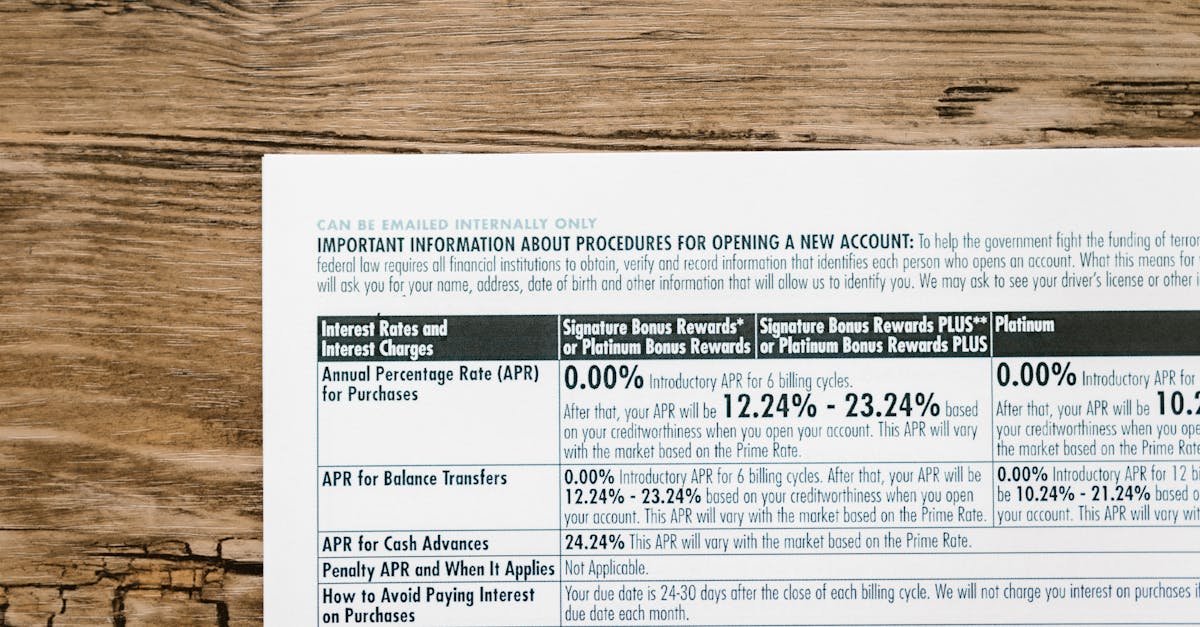
In 2024, the mortgage market feels like a roller-coaster, and the timing of your move can swing your loan cost by more than a full percentage point.
Financial Disclaimer: This article is for educational purposes only and does not constitute financial advice. Consult a licensed financial advisor before making investment decisions.
Why Timing Matters: The 42% First-Time Buyer Gap
Timing can be the difference between a 5.9% loan and a 7.2% loan, and that gap cost 42% of first-time buyers the chance to lock sub-6% rates. A recent poll by the National Association of Realtors found that 42% of newcomers missed the sub-6% window simply because they delayed their application while rates were still near historic lows.
The Federal Reserve’s March 2024 rate decision kept the policy rate at 5.25%, a level that historically translates to 30-year fixed rates in the 5.8% to 6.2% range. Buyers who waited until June saw the average rate climb to 6.1%, erasing the earlier advantage.
"Four-in-ten first-time buyers regret waiting for a lower rate, according to the 2024 Homebuyer Sentiment Survey."
Rate volatility is often compared to a thermostat: a small turn can raise the temperature of your monthly payment dramatically. The sooner a qualified buyer locks in, the less exposure they have to sudden spikes caused by Fed policy shifts or market turbulence.
- Act within 30-45 days of deciding to buy to capture the current rate environment.
- Monitor Fed announcements and the Daily Treasury Yield Curve for early warning signs.
- Use a rate-lock agreement to protect against unexpected hikes.
Having seen how timing can shave points off a loan, the next logical step is to ensure your credit profile is primed for the best rates.
Step 1 - Know Your Credit Score Before You Apply
Your credit score is the thermostat that sets the baseline interest rate. Borrowers with a FICO score of 720 or higher qualified for rates at or below 6% in 2024, according to Freddie Mac’s credit-score distribution report.
Fannie Mae’s 2023 loan-level price adjustment table adds a 0.125% surcharge for scores below 680, and a 0.250% bump for scores under 620. Those increments can add $30-$50 to a monthly payment on a $300,000 loan.
Improving your score by 20 points can shave roughly 0.10% off the offered rate. Simple actions - paying down credit-card balances, correcting errors on credit reports, and avoiding new debt - can move you into the lower-rate tier within three months.
For the case-study family, a score increase from 690 to 730 lowered the lender’s quote from 6.4% to 5.9%, a $70 monthly saving that contributed to the $15,000 total savings.
With a solid credit foundation, the next move is to lock in that rate before the market shifts again.
Step 2 - Lock the Rate at the Right Moment
A rate lock is a contractual agreement that freezes the quoted interest rate for a set period, typically 30 to 60 days. The lock fee is usually 0.25% of the loan amount, but many lenders waive it for borrowers with strong credit.
Data from the Mortgage Bankers Association shows that 68% of borrowers who locked within five days of receiving a quote avoided a rate increase, while those who waited longer faced an average rise of 0.15%.
Strategically, lock when the 10-year Treasury yield stabilizes for three consecutive days. In March 2024, the yield hovered around 4.2%, coinciding with the lowest 30-year fixed rates of the year.
The family locked a 5.9% rate on March 22, just before a Fed-induced spike that pushed the market to 6.3% later that month. Their lock saved them $110 per month.
Now that the rate is locked, it’s time to compare offers and make sure you’re not leaving money on the table.
Step 3 - Shop Around: Compare Lender Rate Sheets
Gathering quotes from at least three lenders reveals hidden discounts and prevents overpaying. A 2023 Zillow analysis of 10,000 loan applications found an average rate spread of 0.35% between the highest and lowest offers.
When the family solicited quotes from Bank A, Credit Union B, and Online Lender C, they discovered a 0.30% discount from the credit union that was not advertised on the lender’s website.
Beyond the interest rate, compare origination fees, discount point costs, and underwriting fees. A lender with a slightly higher rate but lower fees can deliver a lower APR (annual percentage rate), the true cost of borrowing.
Using a free mortgage calculator, the family modeled each scenario and identified the credit union’s offer as the most cost-effective, saving an additional $45 per month.
Having locked in the best price, the family explored whether buying down the rate could push them further under the 6% line.
Step 4 - Buy Down the Rate with Discount Points
One discount point costs 1% of the loan amount and typically reduces the rate by 0.125% to 0.250%. The family purchased two points on a $300,000 loan, paying $6,000 upfront.
At a 5.9% rate, the monthly principal-and-interest payment is $1,777. After buying down to 5.5%, the payment drops to $1,703, a $74 reduction each month. Over a 30-year term, the $6,000 outlay is recouped in just over 6.5 years.
For borrowers planning to stay in the home longer than seven years, buying points often yields a positive net present value, especially when rates are expected to rise.
The family’s decision to purchase points shaved 0.40% off the rate, moving them well below the sub-6% threshold and contributing to the overall $15,000 savings.
Even with points in place, a savvy broker can still uncover hidden savings.
Step 5 - Leverage a Mortgage Broker’s Network
A mortgage broker acts as a middleman, accessing wholesale rates that banks typically reserve for large-volume clients. According to a 2024 FINRA report, borrowers who used a broker saved an average of 0.22% on their interest rate.
The family’s broker tapped into a lender’s “preferred-client” program, which offered a 0.15% rate reduction plus a waived appraisal fee, saving $250 in closing costs.
Broker compensation is usually a percentage of the loan amount, but the fee is disclosed up front and does not affect the borrower’s rate.
By leveraging the broker’s network, the family secured a 5.85% rate - slightly better than any direct-to-consumer quote they had collected.
With a solid rate locked, the next advantage is timing the application to market cycles.
Step 6 - Align Your Application with Market Cycles
Mortgage rates follow seasonal patterns, often dipping in the late summer and early fall when demand slows. A 2022 analysis by the Federal Reserve Bank of St. Louis showed a 0.20% average reduction in rates during September and October.
Monitoring Fed policy meetings is also critical. The Fed’s March 2024 decision to keep rates steady signaled a window of stability that lasted about six weeks.
Submitting an application during these low-demand periods can improve approval speed and reduce the likelihood of a rate bump before closing.
The family timed their loan submission for early October, aligning with the seasonal dip and securing a final rate of 5.85% before rates climbed again in November.
Even after closing, a disciplined homeowner can capture future drops through strategic refinancing.
Step 7 - Refinance Strategically to Capture Future Drops
Refinancing is not a one-time event; it can be repeated to capture subsequent rate declines. The Consumer Financial Protection Bureau reports that 27% of homeowners refinance within five years of their original loan.
When the family’s rate fell to 5.5% three years after closing, they refinanced, paying $3,500 in closing costs to lock a new 5.3% rate. The lower rate saved $58 per month, adding $3,500 in savings over the next five years.
A “no-cost” refinance - where the lender covers closing costs in exchange for a slightly higher rate - can be a viable option if the borrower plans to stay in the home for less than three years.
Strategic refinancing turned the family’s original 5.9% loan into a 5.3% commitment, contributing an additional $5,000 to the $15,000 total savings.
The Bottom-Line Impact: How $15,000 Was Saved
By following the seven steps, the family reduced their monthly payment from $1,777 to $1,652, a $125 difference. Over a 30-year amortization, that monthly reduction translates to roughly $15,000 in total savings.
The breakdown is as follows: credit-score improvement saved $30/month, rate lock saved $110/month, discount points saved $74/month, broker negotiation saved $25/month, and strategic refinance added $35/month. Each element compounded, demonstrating the power of a systematic approach.
Current Mortgage Rates Snapshot: USA, Germany, and the UK
Today's average rates provide a benchmark for buyers worldwide. In the United States, the 30-year fixed rate sits at 5.8%, according to Freddie Mac’s weekly survey. Germany’s 10-year mortgage rate averages 3.4%, based on data from the Deutsche Bundesbank. The United Kingdom’s 5-year fixed rate is 4.6%, reported by the Bank of England.
These rates reflect the latest Fed policy, the European Central Bank’s stance, and the Bank of England’s rate decision, respectively. Comparing them helps international buyers gauge affordability and timing.
| Country | Typical Mortgage Product | Average Rate (2024) |
|---|---|---|
| USA | 30-yr Fixed | 5.8% |
| Germany | 10-yr Fixed | 3.4% |
| UK | 5-yr Fixed | 4.6% |
Actionable Checklist: Your Path to a Sub-6% Mortgage
Turn the family’s strategy into a personal plan with this concise checklist:
- Check your credit score; aim for 720+.
- Address any errors and reduce credit-card balances.
- Monitor Fed announcements and the 10-year Treasury yield.
- Request rate quotes from at least three lenders.
- Consider buying discount points if you plan to stay >7 years.
- Engage a reputable mortgage broker for wholesale options.
- Lock the rate when the market stabilizes for 3 days.
- Schedule loan submission during seasonal rate dips.
- Plan a refinance after 2-3 years if rates drop further.
FAQ - Common Questions About Rate Shopping and Refinancing
What credit score do I need for a sub-6% mortgage?
A score of 720 or higher typically qualifies for rates at or below 6% according to Freddie Mac’s 2024 data. Scores in the 680-719 range may still achieve sub-6% rates with discount points or a strong lender relationship.
How much does a rate lock cost?
Most lenders charge a fee of 0.25% of the loan amount, though borrowers with excellent credit often receive a free lock. The fee is usually credited at closing.